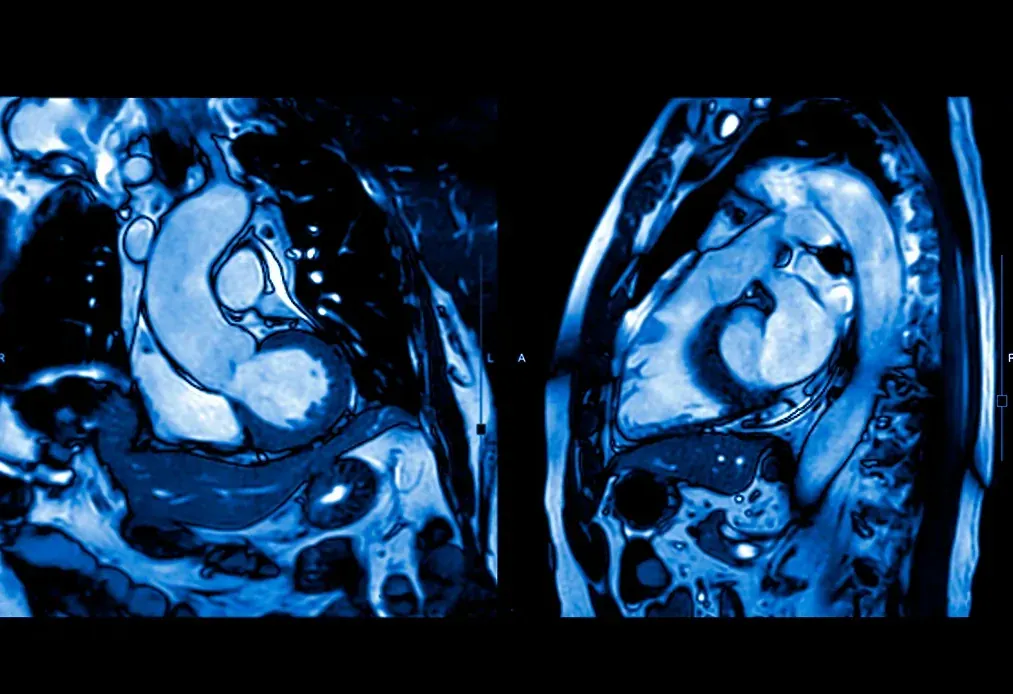
A 28-year-old woman came to us with a heart that kept betraying her without warning. Out of nowhere, and often when she was perfectly calm, it would suddenly start to race. Not a flutter, but a hammering, runaway speed that arrived in an instant. With it came a wave of dizziness, and on more than one occasion she had actually passed out. The episodes were frightening, unpredictable, and they were starting to govern how she lived.
She did what most people do. She went to her family doctor, who referred her onward to an internist. The conclusion they reached was a familiar one: panic attacks, an anxiety disorder. On the surface it fitted. A young woman, sudden surges of a pounding heart, a flood of fear, a feeling that something terrible was about to happen. That is what a panic attack looks like from the outside, and so that is what it was called.
She was started on anti-anxiety medication and began psychotherapy. Eight months passed. Nothing improved.
If a racing heart has been put down to stress or anxiety, but the treatment for anxiety simply is not working, that mismatch is itself worth listening to.
This is where the overlap becomes dangerous, because the symptoms of a fast heart-rhythm problem and the symptoms of a panic attack can look almost identical from the patient's side:
- A sudden, pounding or racing heartbeat that comes on without an obvious trigger
- A heart rate that feels far too fast, sometimes starting and stopping as abruptly as a switch
- Dizziness or lightheadedness during the episodes
- Genuine fainting or near-fainting, which is an important warning sign and uncommon in ordinary panic
- Shortness of breath or chest fluttering while the heart is racing
- A surge of fear and panic, which can be the body's natural reaction to a heart suddenly beating at 180 or more
That last point is the trap. A heart rhythm problem can produce the exact feeling of panic, because being unable to breathe while your chest pounds is, understandably, terrifying. The fear is real. It is just a consequence of the racing heart, not the cause of it.
What the first opinion concluded
The first assessment came from psychiatry and internal medicine, and it landed on an anxiety disorder, with a plan to continue and adjust the psychopharmacological treatment.
Anxiety is a real and common diagnosis, and palpitations driven by anxiety are genuinely frequent. Reaching for that explanation was not unreasonable on first impression.
The problem was not that anxiety was considered. The problem was that it became the final answer before the heart had been fully examined. There were two quiet red flags being talked past. The first was the fainting, which is unusual in pure panic and should always prompt a hard look at the heart. The second was the simple fact that eight months of correct anxiety treatment had changed nothing, which is a strong hint that anxiety was not the underlying mechanism.
The second opinion
Eventually she was referred for a cardiology assessment, and crucially one that included an electrophysiological study, an examination of the heart's electrical wiring rather than just its structure.
The finding was definitive. She had Wolff-Parkinson-White syndrome, known as WPW. In plain terms, she had been born with an extra electrical pathway in her heart, an accessory route that the normal wiring is not supposed to have. Every so often the electrical signal would catch this extra pathway and form a kind of short circuit, looping round and round and driving the heart into a sudden, very fast rhythm. That was her racing heart. That was her dizziness. That was what had knocked her unconscious. None of it was in her head.
Better still, the problem had a precise and lasting fix:
- Catheter ablation, in which a thin, flexible wire is guided up to the heart through a blood vessel
- The extra pathway is located during the electrical study and then carefully neutralised, so the short circuit can no longer form
- For WPW, this is frequently curative rather than merely a way of managing symptoms
She had the ablation. Since then she has been completely free of symptoms. No racing episodes. No fainting. No medication. And, notably, no more panic attacks, because the panic had only ever been her body reacting to a heart in crisis.
Why this case matters
The lesson here is about the order in which we reason.
Anxiety is a real diagnosis, but it should not be a default answer when the basic cardiac workup, an ECG and a Holter monitor, has not been fully evaluated first.
Anxiety is what doctors call a diagnosis of exclusion. It is most safely reached after the physical causes that can mimic it have been ruled out, not before. In her case the simplest, cheapest, least invasive tests, a resting ECG and a 24-hour Holter recording, are exactly the tools that tend to reveal WPW and similar rhythm problems. When those have not been completed and interpreted properly, calling the problem anxiety is a guess wearing the clothes of a diagnosis.
There is also a pattern worth naming gently. The symptoms of young women, in particular, are more likely to be attributed to anxiety or stress before the heart is fully investigated. That is not a reason to distrust any individual doctor, but it is a reason for patients to feel entirely justified in asking for the physical workup to be finished.
A word of balance
This is not an argument that anxiety diagnoses are wrong or overused as a rule. Most palpitations really are benign, and many really are driven by stress, and good doctors treat anxiety seriously because it causes real suffering. The narrow, practical point is this: when a heart is racing badly enough to cause fainting, and when the treatment for anxiety is not working, the heart itself deserves a thorough look before the case is closed.
A second opinion is especially worth seeking when:
- Physical symptoms such as palpitations or fainting are attributed to anxiety or stress without a complete cardiac workup
- You have been told it is anxiety, but the anxiety treatment is not helping after a fair trial
- You have fainted or nearly fainted, which always warrants a careful look at the heart
- Your instinct keeps telling you that something physical is being missed
Which is the question this case leaves us with, and it is a fair one to carry into any consultation: before a set of frightening physical symptoms is filed under anxiety, has anyone actually finished reading the ECG?