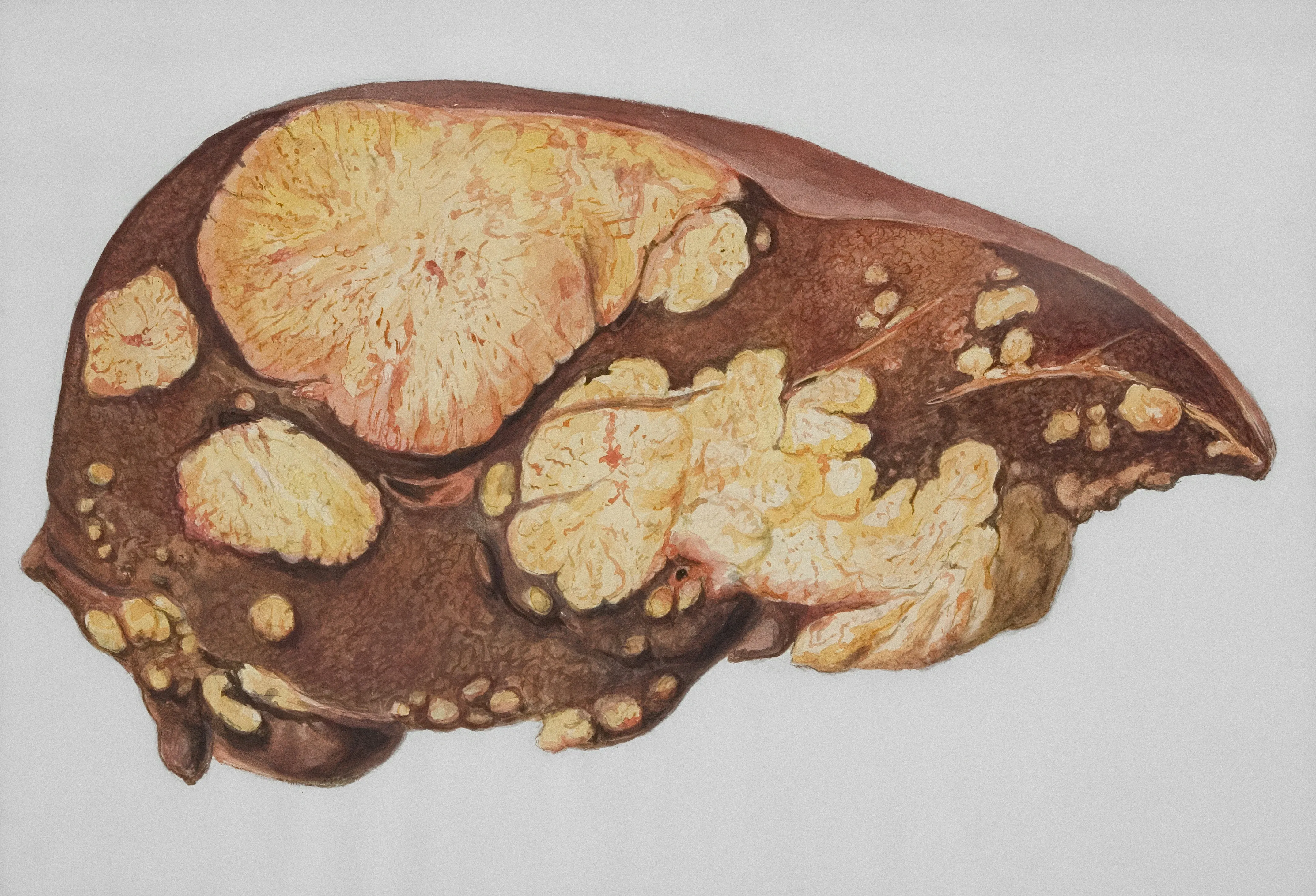
A 32-year-old man came to us with a liver that had been quietly sounding an alarm for two years. His blood tests kept showing his liver enzymes raised to about three times the normal level, a persistent signal that something was inflaming or damaging the organ. He had been given an explanation: alcohol-related liver damage. There was just one problem with it. He drank very little, and he had said so. He was simply not believed.
That detail is the heart of this case, and it is worth dwelling on, because it is a different kind of diagnostic failure than the others. He had not failed a treatment. He had given a truthful account of his own life, and a stigmatising assumption had been allowed to override it. When a man turns up with liver damage, the suspicion that he is drinking more than he admits is common, and sometimes it is even correct. But in his case it was wrong, and treating that suspicion as fact closed the investigation before it had really begun.
If you have been told your liver problem is down to a cause you know does not fit your life, and you feel your own account has been waved away, that is a reason to ask for the search to continue rather than stop.
There is a clinical reason his case should never have ended at an assumption, and it is his age. Persistently abnormal liver tests in a young person are a classic trigger to look systematically for an inherited or metabolic cause, several of which are treatable and dangerous to miss:
- Liver enzymes that stay raised over months or years without an obvious, confirmed explanation
- A young patient, particularly under forty, in whom genetic and metabolic causes are far more likely
- A history that simply does not match the assumed cause, such as little or no alcohol use
- Subtle neurological signs, including a fine tremor, changes in handwriting, slurred speech or new clumsiness
- Mood or personality changes, which are easy to attribute to stress and easy to overlook
- A coppery ring around the coloured part of the eye, invisible to the naked eye but findable on a specialist examination
Some of these are silent for years, which is exactly why a young person with unexplained liver tests deserves a deliberate search rather than a convenient label.
What the first opinion concluded
His first assessment came from his GP and an internist, who attributed the liver damage to alcohol and offered counselling and advice to abstain.
Alcohol is one of the most common causes of liver disease, so considering it is entirely reasonable. The failure was not in thinking of it. It was in being so certain of it that the patient's own truthful history was discounted.
Once the diagnosis was fixed to that assumption, the obvious next steps never happened. Nobody asked why a young man who drank little had a steadily damaged liver, and nobody went looking for the metabolic causes that fit his profile far better. Meanwhile the real disease, if it was one of the progressive kind, was being given two years to advance untreated.
The second opinion
He was referred to hepatology for a medical second opinion, and this time his account was taken at face value and used as a starting point rather than a problem to be corrected. Believing that he drank little, the specialist asked the natural next question: then what is actually damaging this liver? They ran the tests that question demands:
- Ceruloplasmin, a copper-carrying protein in the blood, which came back low
- Urinary copper excretion, which came back high
- A slit-lamp examination of the eyes, which revealed the tell-tale ring of copper deposits around the cornea
The diagnosis was Wilson's disease, an inherited disorder in which the body cannot properly clear copper, so it slowly accumulates in the liver, the brain and the eyes. It explained the liver damage entirely, and it had nothing to do with alcohol. His history had been right all along.
Wilson's disease is treatable, and the difference treatment makes is dramatic. He was started on chelation therapy with D-penicillamine, a medication that binds the excess copper and helps the body remove it. His liver values returned to normal, and the early neurological symptoms that had begun to creep in started to recede. He had been caught in time.
Why this case matters
The lesson sits at the meeting point of medicine and listening.
Sometimes the history does not explain everything, and sometimes the answer is in the genes. But the search only begins if the patient's account is believed rather than overruled.
Communication in healthcare is not a soft extra here. It was the deciding factor. The first diagnosis went wrong precisely because a truthful patient was not trusted, and the right diagnosis became possible the moment someone took his words seriously and asked what else could be true. A young person with unexplained liver abnormalities should prompt a systematic hunt for a metabolic cause, and that hunt is far more likely to happen when the doctor is working with the patient's real history rather than against an assumed one.
A word of balance
This is not a claim that alcohol is rarely the cause of liver disease, because it is genuinely one of the most common causes, and honest conversations about drinking are an important part of care. Wilson's disease is rare, and not every raised liver enzyme points to a genetic disorder. The narrow, practical point is about the mismatch: when the assumed cause does not fit the patient's life, and the patient is young with a persistent, unexplained abnormality, that is the moment to investigate the metabolic possibilities rather than to insist on the assumption.
A medical second opinion is especially worth seeking when:
- Your liver tests stay abnormal and the explanation given does not match your actual habits
- You are young and have a persistent liver abnormality that has not been systematically investigated
- You feel your truthful account has been dismissed rather than taken seriously
- Treatable genetic or metabolic causes have not been tested for
Which leaves the question this case asks of every confident diagnosis built on an assumption: when the patient's own history contradicts the label, do we investigate further, or do we simply decide the patient must be wrong?
This is exactly the kind of situation CW1 exists for, helping patients secure a medical second opinion when an explanation does not fit, and strengthening the communication in healthcare that treats a patient's account as evidence rather than an obstacle.
Note: this is one case rather than medical advice. Persistently abnormal liver tests deserve proper evaluation, and the right next step is a careful conversation with a hepatologist.