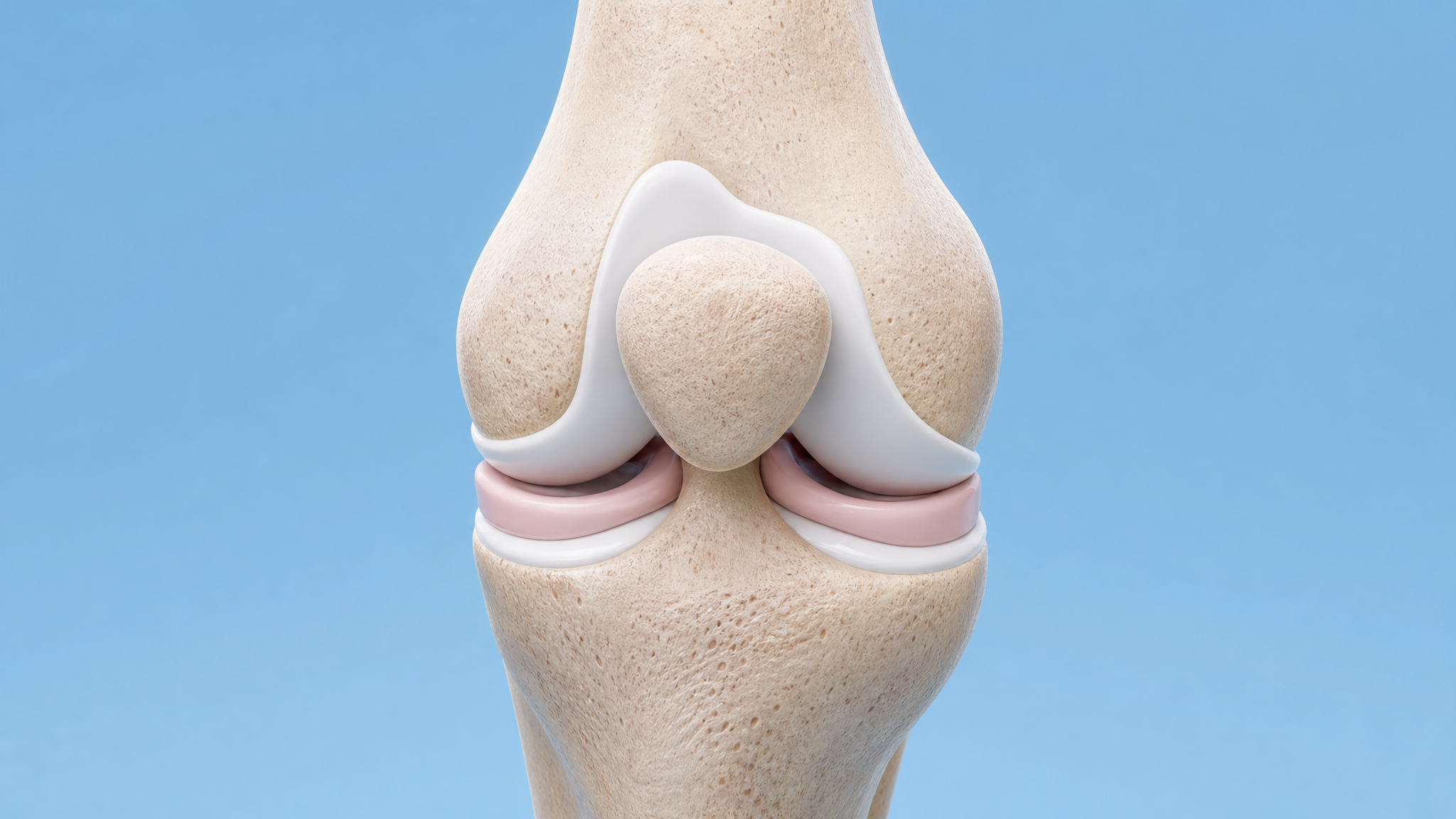
A 53-year-old man came to us with a right knee that had been slowly closing his world down. The pain had built over about two years, never dramatic on any single day, but always a little worse than the last. By the time he sought help, it was dictating what he could and could not do. Activity hurt, effort hurt, and the things he used to do without a second thought now came with a price.
An X-ray was taken, and it showed wear. There were osteophytes, the small bony spurs that form around a joint as it ages, and a narrowing of the space on the inner side of the knee, graded as moderate. With those images in hand, the path seemed obvious, and a date was set for a total knee replacement.
It is worth slowing down at the X-ray, because this is where a great deal of knee surgery is decided, and where a great deal of it is decided too quickly. An X-ray of an aching knee almost always shows something, especially past the age of fifty. The harder truth is that what the X-ray shows and how much a knee actually hurts are only loosely related.
If you have been shown an X-ray of worn cartilage and told you need a new knee, it is worth knowing that the picture alone rarely settles the question.
Knee osteoarthritis tends to announce itself in a recognisable, mechanical pattern, and understanding it helps separate the knees that need surgery from the ones that do not:
- Pain that worsens with activity and load and eases with rest, the signature of mechanical wear
- Pain on the inner side of the knee, matching the inner compartment where narrowing most often begins
- Stiffness after sitting or first thing in the morning that loosens within a few minutes of moving
- Difficulty with stairs, kneeling, squatting or long walks, with a shrinking range of comfortable activity
- Grinding, clicking or a catching sensation as the joint surfaces roughen
- Occasional swelling after heavier use
These are real and worth treating, but they describe a spectrum, and most points on that spectrum are not surgical.
What the X-ray actually showed
His images placed him in the middle of that spectrum, not the end of it. The changes were graded as moderate, not severe, with bony spurs and inner-compartment narrowing rather than a knee worn down to bare bone. This was a joint showing the ordinary signs of use and age, not one that had structurally failed.
There was also the matter of his age. At 53, he was young for a knee replacement, and that fact carries weight that patients are rarely told about clearly.
The first recommendation
The first opinion came from orthopaedics, and it moved decisively toward surgery. A total knee replacement was recommended, and the operation was scheduled.
When an X-ray shows arthritis and a patient is in real pain, replacing the joint can feel like the clean, permanent fix. For an end-stage knee, it genuinely is one of the most successful operations in modern medicine.
But two things sat uneasily against that plan. The first was that his arthritis was moderate rather than end-stage, and moderate arthritis often responds well to treatment that is not surgery. The second was the part that matters enormously for a man his age. Knee implants do not last forever. They commonly serve around fifteen to twenty years before they wear out, and a 53-year-old has a real chance of outliving his first one. Replacing a knee early often means signing up for a second, more difficult revision operation later in life, with outcomes that are typically worse than the first. Operating too soon does not just risk being unnecessary. It can spend a resource he might badly need later.
The second opinion
Before going ahead, he sought a second opinion from sports medicine and knee specialists, and their plan was to treat the knee rather than replace it. It rested on three measures:
- A structured physiotherapy programme to strengthen the muscles supporting and protecting the joint
- A targeted weight reduction of around ten percent, which matters more than it sounds because every kilogram lost removes several kilograms of force from the knee with each step
- An intra-articular intervention, an injection into the joint to calm symptoms while the strengthening and weight loss took effect
The logic was to reduce the load and improve the support around a joint that was worn but not destroyed, and to give that approach genuine time to work before considering anything irreversible.
He committed to it. After eighteen months he was functionally free of pain, fully active, and living without an implant in his knee.
Why this case matters
The principle here is one this series keeps returning to, because it keeps proving true across very different parts of the body.
A structural finding on an X-ray does not automatically require a structural intervention. The image shows wear. It does not, by itself, prove that surgery is the only way to live without pain.
The X-ray is seductive precisely because it is visible and concrete. It feels like proof. But the cartilage on the film is not the whole story of the pain, and for a moderately arthritic knee, the muscles around it and the load passing through it are often where the real leverage lies. Treating those first costs little and risks almost nothing, while preserving both the native joint and, for a younger patient, the limited lifespan of any future implant.
A word of balance
This is not an argument against knee replacement, which transforms lives for people with truly end-stage arthritis that has exhausted other options. Some knees genuinely need replacing, and delaying too long has its own costs. The point is about sequence and timing rather than rejecting surgery: for moderate arthritis, and especially in a younger patient, conservative treatment deserves a real and committed trial before a permanent operation is booked.
A second opinion is especially worth seeking when:
- A joint replacement is recommended for arthritis described as moderate rather than severe or end-stage
- You are relatively young for the operation, and implant lifespan and future revision have not been discussed
- Conservative options such as structured physiotherapy and weight loss have not been genuinely tried first
- The decision rests heavily on an X-ray, with little weight given to how the knee actually functions
Which leaves the question this case poses directly, and it is a difficult line to draw: who decides where "operating at the right time" ends and "operating unnecessarily" begins, and on what evidence?
Note: this is one case rather than medical advice. Knee decisions are individual, and the right next step is a careful conversation with your own specialists.